


Children and teens can learn to settle intense feelings, but self-soothing is not a demand to cope alone or stop feeling upset. Caregivers can build the skill by offering connection first, then helping young people discover strategies that suit their age, sensory preferences, and situation. These nine approaches focus on practice, choice, and growing independence.
Key ideas to keep in mind
- Offer calm connection before expecting a child to use a coping skill.
- Practice strategies during ordinary moments, not only during a crisis.
- Let the young person choose among a few safe options.
- Measure progress by recovery and self-awareness, not by never becoming upset.
Nine practical ways to support self-soothing
1. Lend calm before asking for calm
Stay close, lower your voice, and keep your words simple when a child is overwhelmed. You might say, “I’m here. We can take this one step at a time.” A steady adult can help a child feel safer before they can think through options.
As the child settles, invite them to try a strategy rather than directing them through one. Responsive relationships and repeated practice are important foundations for developing self-regulation, as explained in Harvard’s overview of self-regulation. You can also build on emotional literacy in children by responding to feelings without shaming them.
2. Put a simple name to the feeling
Help children notice and name what is happening: “You look disappointed,” or “It sounds like you’re worried about tomorrow.” If they disagree, accept their description. Naming an emotion is not a trick to make it disappear; it gives the child a clearer starting point for choosing what might help.
For younger children, offer a few feeling words or use a simple scale from comfortable to very upset. Teens may prefer private reflection before talking. Avoid turning the moment into an interrogation or insisting they explain themselves before they are ready.
3. Offer breathing as an option, not a command
Gentle, unhurried breathing can give some children a simple focus. Invite a younger child to pretend to smell a flower and slowly cool soup. A teen might try breathing out a little longer than breathing in, without forcing a specific count.
If focusing on breath feels uncomfortable, switch to another option. The goal is not perfect technique; it is helping the young person find a manageable way to pause. Grounding exercises offer other ways to bring attention to the present.
4. Use the senses to reconnect with the present
Offer a brief sensory activity, such as noticing three things in the room, holding a cool glass of water, or listening for a nearby and distant sound. Keep it concrete and low-pressure. A child who is already overloaded may not want a long list of instructions.
Ask which senses feel comforting rather than assuming that certain textures, sounds, or lights work for everyone. Sensory preferences vary, so treat this as exploration, not a test.
5. Make room for movement and rhythm
Some children find it easier to settle their bodies through gentle movement than by sitting still. Offer a short walk, stretching, rocking in a safe chair, or squeezing a pillow. For a teen, a few minutes of movement away from a crowded room may feel more acceptable than a formal exercise.
Make the activity safe and voluntary. Movement should support recovery, not serve as punishment or a way to dismiss the feeling behind the behavior.
6. Create a calm place with a few familiar choices
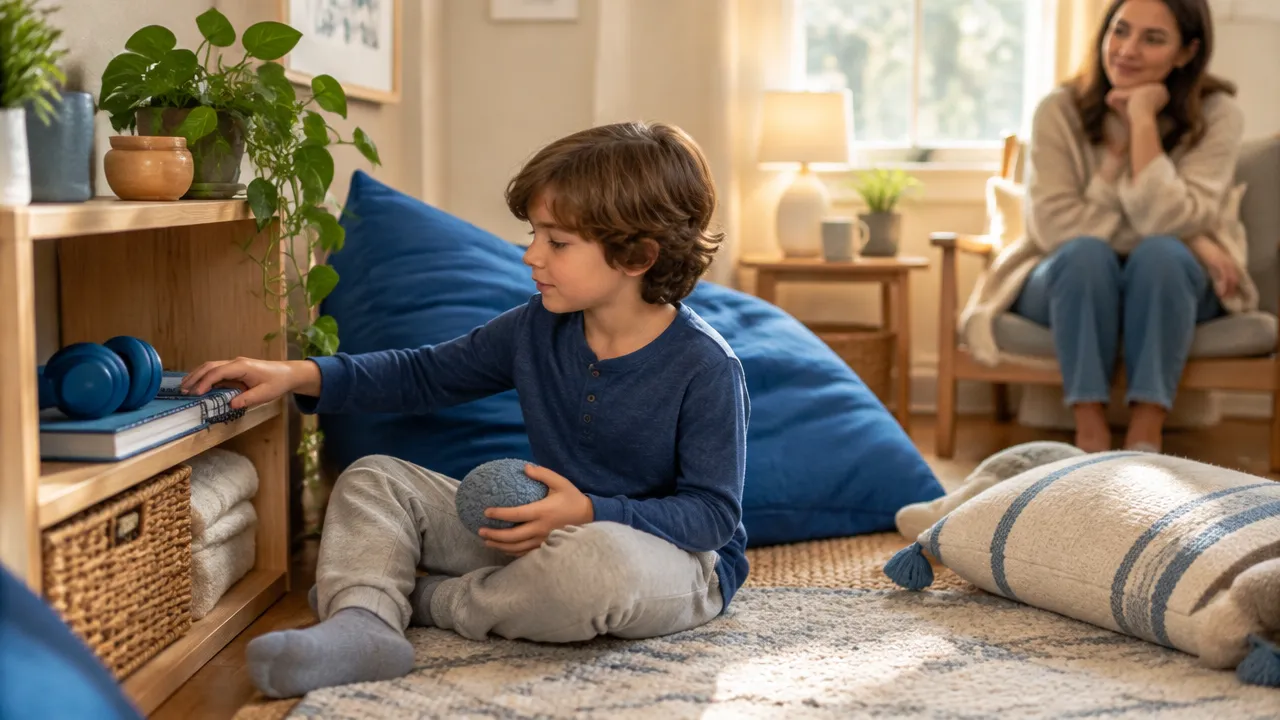
A calm corner can make helpful options easy to reach. It might include a cushion, paper and pencils, a favorite book, or comfortable headphones. Invite the child to help choose and arrange the items, and explain that the space is available when they want a pause.
Do not use the area to isolate or discipline a child. The purpose is to offer a predictable place for regrouping while keeping supportive connection available.
7. Let feelings come out through words, art, or music
Not every child wants to talk while upset. Drawing, writing a few lines, making a playlist, or using a feelings journal can offer another way to express what is going on. For younger children, drawing together may make it easier to begin a conversation without demanding an explanation.
Give teens privacy around personal writing unless there is a specific safety concern. Reflective journaling can be introduced as an option for noticing feelings, not as homework or a requirement to share.
8. Practice supportive self-talk and small choices
Help a child find a phrase that feels believable, such as “This is hard, and I can take one step,” or “I can ask for help.” Avoid insisting on cheerful statements when the child does not believe them. For teens, invite them to write their own words rather than supplying a slogan.
Offer two realistic choices when possible: “Would you like quiet company or a few minutes alone nearby?” A small choice restores a sense of agency without expecting the young person to solve everything at once.
9. Rehearse skills in calm moments and reflect afterward
Try calming options when the child is already relatively settled. A brief conversation can identify what they might want to try during a hard moment, who they can approach, and what usually makes the situation more difficult. This makes the plan familiar before emotions run high.
Afterward, reflect without judging: “What helped a little? What should we try differently next time?” Self-regulation develops with support and repetition, not through a single successful attempt. Everyday emotional regulation can also be framed as a skill that grows with practice.
When self-soothing needs more support
Self-soothing strategies are useful tools, not a substitute for understanding what is driving distress. If a child’s difficulties are persistent, unusually intense, disrupting daily life, or raising safety concerns, talk with a pediatrician or a licensed mental health professional. Keep responding with care while seeking guidance; asking for help is part of responsible support.
Frequently asked questions
How can I teach my child to self-soothe?
Start by helping your child feel understood, then practice one or two calming options when they are already settled. Try slow breathing, naming feelings, movement, drawing, or sensory grounding. Let your child help choose what feels useful, and stay nearby as needed. The aim is gradual skill-building, not instant independence.
What if my child rejects calming strategies?
Do not insist that a particular technique should work. A child may need space, movement, quiet company, or a different sensory approach. Acknowledge the frustration, offer two simple choices, and revisit the strategy later when everyone is calm. If distress is frequent or disruptive, consider discussing it with a qualified professional.
Does self-soothing mean children should calm down alone?
No. Self-soothing is the growing ability to use helpful strategies, while calming down describes a possible result. Children often need a trusted adult’s support before they can manage strong feelings on their own. Being present and responsive is compatible with building independence over time.
Does self-soothing mean leaving a child alone at bedtime?
Self-soothing does not require leaving a distressed child alone at bedtime. A predictable routine and a reassuring caregiver can support a child who is learning to settle. Sleep needs and family circumstances differ, so treat bedtime concerns separately from emotional regulation and seek individualized guidance if the problem persists.
When should I seek professional help for my child’s emotional distress?
Consider professional support when distress is persistent, unusually intense, interferes with school, relationships, sleep, or daily activities, or leaves you unsure how to respond. If a child may hurt themselves or someone else, seek urgent local help. A pediatrician or licensed mental health professional can help assess next steps.