


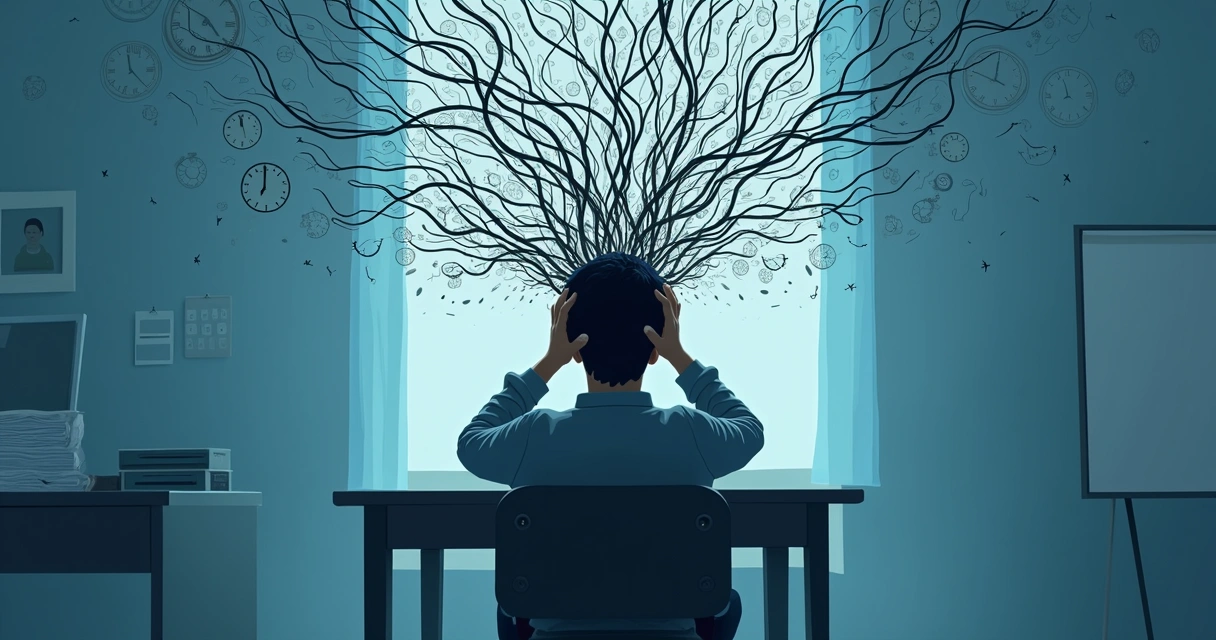
Everyone has caught themselves spinning thoughts in circles, replaying the same scenario or problem until the mind feels exhausted. We know how tiring it can be. Overthinking is more than just a habit; it often feels like a trap. However, there are ways to step out of this pattern and reclaim our calm. In our experience, breaking out of mental loops is both a practice and a skill.
Why do mental loops happen?
Overthinking usually appears when we want certainty, control, or a sense of safety. We try to solve problems in our head before acting. But instead of offering solutions, this often locks us in a loop, repeating scenarios, doubts, and worries.
Overthinking rarely brings clarity; it brings fatigue.
This cycle can become automatic—our mind seeks answers but only finds more questions. Understanding why we do this helps us interrupt the process.
What are the effects of overthinking?
Spending hours replaying thoughts doesn’t only create anxiety. It also affects sleep, focus, emotional balance, and even our relationships. When we worry endlessly about “what ifs,” it becomes hard to enjoy the present or make decisions with confidence.
With this in mind, here are seven approaches we have found support real change for those caught in loops of thought.
1. Label your thoughts, don’t judge
Often, we treat every thought as fact—or even as a threat. What if we stepped back and simply noticed: “I am having a worrying thought,” or “This is a memory, not reality”? Giving a gentle label to our thoughts, rather than judging or believing them, reduces their power.
Noticing the process of thinking changes our relationship to it.Naming helps create a small gap between "me" and "my thoughts." That gap helps us choose our next step, instead of just reacting.
2. Use the “now” as an anchor
Mental loops thrive on future worries or past regrets. Pulling our attention back to the present interrupts this cycle. We like to focus on sensory details—the feeling of feet on the floor, the texture of an object in our hand, or the sound of our breath.
The present moment cannot be overthought. It can only be experienced.
Even one minute spent fully in the present begins to weaken the loop of worry.
3. Set a time limit for thinking
When something needs attention, constant re-examining usually adds confusion, not solutions. We suggest giving yourself a set time—maybe ten minutes—to think about the issue, jotting down ideas or concerns. When the time is up, shift to another activity.
- Set a timer to help keep boundaries real.
- Write a summary of your thoughts after the time is over.
- Close the notebook or file, signaling to your mind the session is complete.
This structure trains our brain to stop obsessing and start acting.
4. Practice movement to release built-up energy
Overthinking is exhausting partly because it traps energy in our head. Simple movement—walking, stretching, or gently shaking out the shoulders—can break the loop. We have seen even a two-minute walk help shift focus and mood.
Physical movement quickly reminds us that we live in a body, not just a mind.Sometimes, movement allows new answers to appear without deliberate effort.
5. Question your “what ifs”
Our mind loves to predict every possible negative outcome. But most of these “what ifs” never happen. Asking yourself, “Is this thought true?” or “What evidence supports this worry?” brings rational light to exaggerated fears.
- Are there facts, or just feelings?
- What would I say to a friend with this worry?
- How likely is this scenario, truly?
By challenging assumptions, worries start to lose authority.
6. Take action—any action, however small
Thinking thrives when we don’t act. Even a tiny step—a single email, a question asked, or organizing your desk—moves thoughts from idea to reality. We believe that action, not perfection, creates relief.
The smallest action breaks the largest loop.
Action builds momentum and makes the mind a partner, not a dictator.

7. Create a calming ritual before sleep
Nighttime is fertile ground for repeating thoughts. Creating a simple bedtime ritual—such as reading a few calming paragraphs, gentle stretching, or slow deep breaths—signals our mind to wind down. In our experience, repeating this ritual daily trains our brain to expect rest, not rumination.
Sleep is a reset for mind and emotion. Guarding it helps quiet the cycle of overthinking.Stability in our evening routine is a gift to our future self.
Conclusion: Relearning how to relate with your thoughts
Breaking free from overthinking does not mean silencing all worries. Instead, we relearn how to relate with our thoughts. We have seen that by labeling thoughts, grounding ourselves in the present, taking small actions, and nurturing our sleep, it becomes easier to find both peace and clarity.
You are not your thoughts; you are the space that notices them.
We believe these practices can bring relief from mental loops and help us all reclaim our power of choice. The journey is gradual, but every step counts.
Frequently asked questions
What is overthinking?
Overthinking is a pattern where we repeat the same thoughts or worries in our minds, often unable to let them go or make decisions. This process often leads to stress, confusion, and difficulty enjoying the present moment.
How can I stop overthinking fast?
Interrupting overthinking quickly can be helped by grounding in the present—focusing on a specific object, sensation, or breath. We also recommend setting a timer for your thoughts and then shifting to a physical activity, like walking, to reset your mind.
What are signs of overthinking?
Common signs include trouble sleeping, constant replaying of events, indecision, persistent worry, and feeling mentally tired without resolving the issue. It can also cause irritability and difficulty focusing.
Are there exercises to stop overthinking?
Yes. Exercises include labeling your thoughts, using grounding techniques (like naming things you see), practicing mindful movement, setting thinking time limits, and deep breathing rituals—especially before sleep.
Is overthinking bad for my health?
Yes, chronic overthinking can affect sleep, increase stress hormones, and contribute to anxiety or depression over time. Addressing it early helps support both mental and physical well-being.