

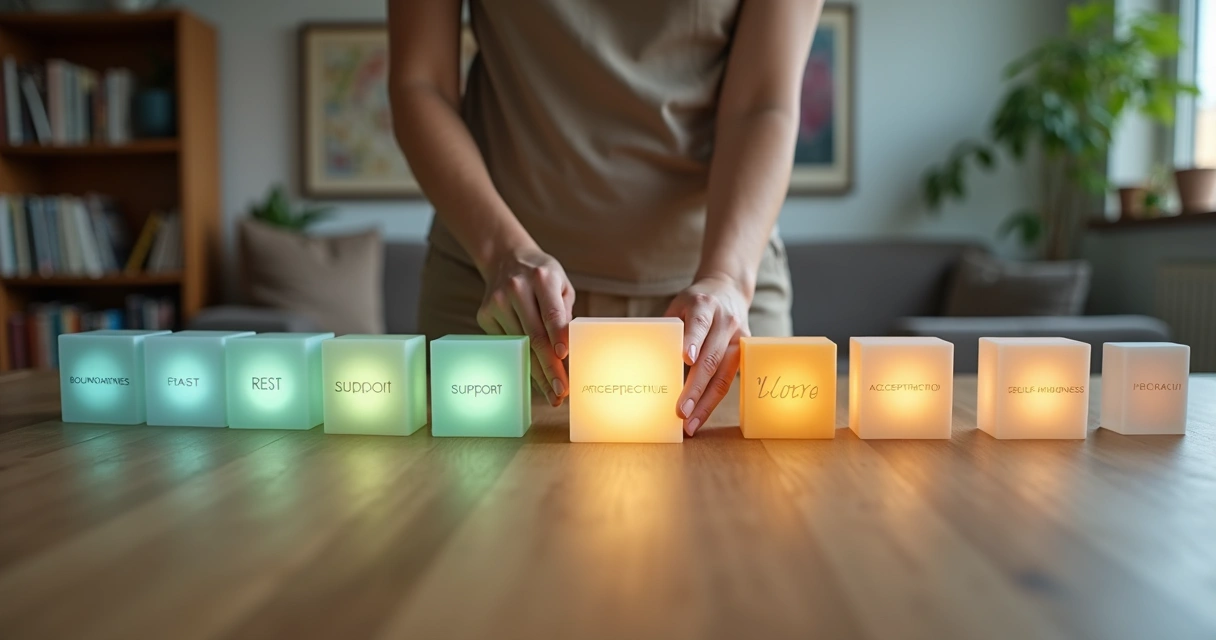
We often hear that resilience means staying strong under pressure. That sounds simple. Real life is not. Resilience grows in the middle of stress, loss, change, doubt, and fatigue. It is shaped by habits, inner dialogue, relationships, and the way we respond when things do not go as planned.
Psychological resilience is not the absence of pain, but the ability to recover, adapt, and keep our inner balance while facing it.
In our experience, many people try hard to become more resilient but weaken the process without noticing it. They push too much, hide too much, or expect results too fast. A person may look calm on the outside and still be close to emotional exhaustion inside. We have seen this pattern in students, parents, professionals, and caregivers. Different settings, same trap.
Below, we will look at six mistakes that can slow down or distort the growth of resilience.
Mistake 1: Treating resilience like emotional suppression
One of the most common errors is thinking resilience means not feeling. People tell themselves to be tougher, quieter, more controlled. They avoid tears, fear, disappointment, or grief because they think these reactions show weakness.
But when feelings are buried, they do not disappear. They often return as irritability, numbness, sleep trouble, or sudden emotional overload.
What we deny tends to return.
We think healthy resilience begins with honest recognition. If we are hurt, we name it. If we are anxious, we admit it. This does not make us fragile. It makes us aware.
A more grounded response usually includes:
Noticing what we feel without judging it too fast
Putting words to the experience
Allowing time for emotional processing
Seeking support when the weight becomes too much
Resilience grows through emotional contact, not emotional denial.
Mistake 2: Believing we must handle everything alone
Some people confuse independence with strength. They think asking for help means failure. So they carry stress in silence. At first, this may look admirable. Later, it often becomes isolation.
We have all seen moments like this. Someone says, “I am fine,” but their voice is flat, their body is tense, and they stop replying to messages. The problem is not only the stress itself. It is the loss of connection.
Psychological resilience is deeply relational. Supportive bonds help us regulate emotion, gain perspective, and feel less trapped by what we face.
This matters even more in high-pressure environments. For example, research with nursing students in Hong Kong and Australia found lower resilience and lower self-efficacy among the Hong Kong group. Findings like this remind us that resilience is not only a private trait. It is also shaped by context, pressure, and the support systems around us.

Mistake 3: Chasing perfection instead of adaptability
Many people try to become resilient by controlling every detail. They create strict standards, demand flawless performance, and fear mistakes. On the surface, this can look like discipline. In practice, it can create constant internal pressure.
When we believe every error is dangerous, our nervous system stays on alert. We stop learning with openness and start reacting with fear.
This pattern appears clearly in a four-year study with medical students, which found that concern over mistakes increased while resilience decreased over time. That is a sobering picture. Environments that reward perfectionism may weaken the very stability people need.
We build resilience more effectively when we replace rigid self-demand with flexible self-correction. That means:
Seeing mistakes as feedback
Adjusting goals when reality changes
Accepting that growth can be uneven
Keeping self-respect during setbacks
Perfection seeks control. Resilience builds recovery.
Mistake 4: Ignoring the body while training the mind
People often treat resilience as a purely mental skill. They read, reflect, and try to think better. That helps, but the body is part of the story. When sleep is poor, stress is high, and rest is missing, emotional balance becomes much harder to sustain.
We cannot ask the mind for steadiness while the body is running on exhaustion. Short sleep, shallow breathing, skipped meals, and constant stimulation wear down our ability to cope.
This is one reason distress becomes so widespread in demanding routines. An umbrella review covering 171,828 nursing students found high rates of sleep disturbance, burnout, anxiety, and depression. These numbers show something plain. If we speak about resilience without addressing basic strain, we miss the full picture.
Even simple practices can help restore internal stability:
Keeping regular sleep times
Taking brief pauses during intense days
Moving the body with consistency
Reducing overstimulation before rest
Small physical habits can shape emotional endurance more than people expect.
Mistake 5: Expecting resilience to appear quickly
This mistake is easy to make because many people want relief now. They read about resilience and hope for a shift within days. When old reactions return, they assume nothing is working.
But resilience is usually built through repetition. We learn it in ordinary moments. In the pause before reacting. In the honest conversation we almost avoided. In the night we choose rest instead of more pressure.
There is a quiet story here. A person faces the same stress for months. At first, they panic. Later, they still feel stress, but they pause, breathe, ask for help, and recover faster. The outside event may look similar. The inner response has changed. That is growth.
Resilience is often gradual, and its first signs are subtle.

Mistake 6: Focusing only on coping, not on meaning
Sometimes people become skilled at “getting through” hard days but lose contact with why they are living the way they are living. They cope, perform, solve, and continue. Inside, they feel empty.
Resilience is stronger when our actions connect to meaning. We do not need grand answers. Often, a clear sense of value is enough. Care. Learning. Service. Family. Integrity. Presence.
When we reconnect with meaning, effort becomes easier to carry. Pain still hurts, but it is no longer random. We understand what we are protecting, rebuilding, or trying to become.
This can begin with a few direct questions:
What am I trying to preserve in this difficult phase?
What kind of person do I want to be under pressure?
What values do I refuse to abandon when life becomes hard?
These questions do not remove stress. They give it direction.
Conclusion
Building psychological resilience is less about acting strong and more about becoming real, flexible, and steady. We weaken this process when we suppress emotion, isolate ourselves, chase perfection, neglect the body, rush the timeline, or live without meaning.
There is good news in that. Each mistake can be corrected. We can learn to feel without collapsing, ask for support without shame, and adapt without losing our center. This work takes patience. Still, it changes the way we meet life.
Resilience is practiced before it is proven.
Frequently asked questions
What is psychological resilience?
Psychological resilience is the capacity to recover, adjust, and remain mentally steady after stress, loss, pressure, or change. It does not mean feeling nothing. It means we can face difficulty, process what happens, and move forward with awareness.
How to build psychological resilience?
We build psychological resilience through steady habits and honest self-awareness. Helpful steps include naming emotions, keeping supportive relationships, improving sleep, allowing recovery time, learning from setbacks, and staying connected to personal values.
What are common mistakes to avoid?
Common mistakes include suppressing feelings, refusing help, seeking perfection, ignoring physical health, expecting instant change, and focusing only on coping without a sense of meaning. These patterns can make stress harder to carry over time.
How can I improve my resilience?
We can improve resilience by starting small and staying consistent. It helps to pause before reacting, speak openly with trusted people, create better rest routines, challenge harsh self-talk, and reflect on what gives life direction. Progress often shows up in calmer recovery, not in a stress-free life.
Is building resilience worth the effort?
Yes. Building resilience is worth the effort because it helps us respond to hardship with more clarity, balance, and emotional strength. We may not control every event, but we can strengthen the way we meet them.