


Small moments make all the difference in life. The way we handle a heated conversation, a piece of sad news, or an unexpected joy shapes our journey little by little. At the heart of these moments is something easy to overlook, but remarkably powerful: emotional granularity. We have seen, through our work and research, that naming our feelings with precision can change not just how we feel, but how we think and act.
What is emotional granularity?
Emotional granularity is the skill of being able to identify and label feelings with a high degree of precision and subtlety. Instead of simply feeling "bad" or "good," someone with high emotional granularity can distinguish between feeling "irritated," "disappointed," "overwhelmed," or "restless." They have a rich emotional vocabulary and can sense the fine differences between emotional states.
Think for a moment: when was the last time you felt out of sorts, but couldn't find the words? Many people grow up learning very broad emotional words. Labels like "angry," "happy," "sad," or "scared." Yet, our emotional worlds are much more detailed.
When we give our feelings a name, we give ourselves a little bit of power over them.
Why naming feelings changes everything
There is a curious effect that happens when we describe an emotion clearly. A strong feeling becomes defined. Instead of a cloudy ball of discomfort, it becomes a single shade of blue or red or green that we can understand. That simple act is linked to better emotional control.
In our observations, this works in several ways:
- It keeps us from being overwhelmed by emotion, because the feeling feels smaller and less mysterious once it's labeled.
- It lets us act more thoughtfully, rather than reacting on impulse.
- It provides clues about what caused the feeling in the first place.
- It points us toward better decisions, because we know what is truly going on inside.
When we practice labeling our emotions, self-control gets easier, not harder. Imagine the difference between someone who says, "I'm just angry," and another person who stops to say, "Actually, I feel unappreciated and embarrassed." The second person now knows the real problem—and the solutions become much clearer.
How emotional granularity supports self-control
Self-control is a challenge for all of us. Emotions arrive with force, and many times they urge us to act before we think. But, as we have witnessed, the mind can be quietly trained to pause. This is where emotional granularity shines.
When we are precise about what we feel, we interrupt the automatic chain reaction between an emotion and an impulsive action. For example, if we say, "I'm stressed," we might reach for a quick relief—food, distraction, or an angry word. But if we say, "I feel anxious because my workload is piling up and I'm worried about disappointing others," the situation becomes manageable.
With this awareness, a few small, but profound, changes typically unfold:
- We pause for just a second longer before acting
- The emotion begins to shift, losing intensity
- We start looking for a solution, not just a release
- Our relationships feel safer, because we don't lash out or withdraw as much
People with high emotional granularity often build healthier habits over time. Instead of fighting their feelings, they work with them, like skilled gardeners tending different plants in a wide, colorful garden.
The science behind labeling emotions
Research in psychology and neuroscience suggests that labeling emotions changes brain activity. Describing emotions with accuracy can reduce activity in the brain's fear centers and boost the regions linked to problem-solving and self-control. In our review of the literature, we noticed clear patterns: children and adults who can describe emotions more precisely tend to experience less depression, less anxiety, and less impulsivity overall.
Naming emotions can also help the body settle down after stress. When we teach this skill to children or adults, we often see fewer emotional outbursts and more calm, collected responses to life's surprises.
An intriguing side effect is that, as our emotional vocabulary grows, we also become less judgmental of ourselves and others. The emotional world shifts from "black and white" to "full color."
Building your emotional vocabulary
One of the best ways to develop emotional granularity is to learn new feeling words. That's something we actively encourage. No matter our age, we can expand the language we use for what we feel.
Here are some small, daily acts that help grow this skill:
- Keep a journal. Describe your feelings each day using as many details as possible. Try to capture at least three distinct emotions, even on calm days.
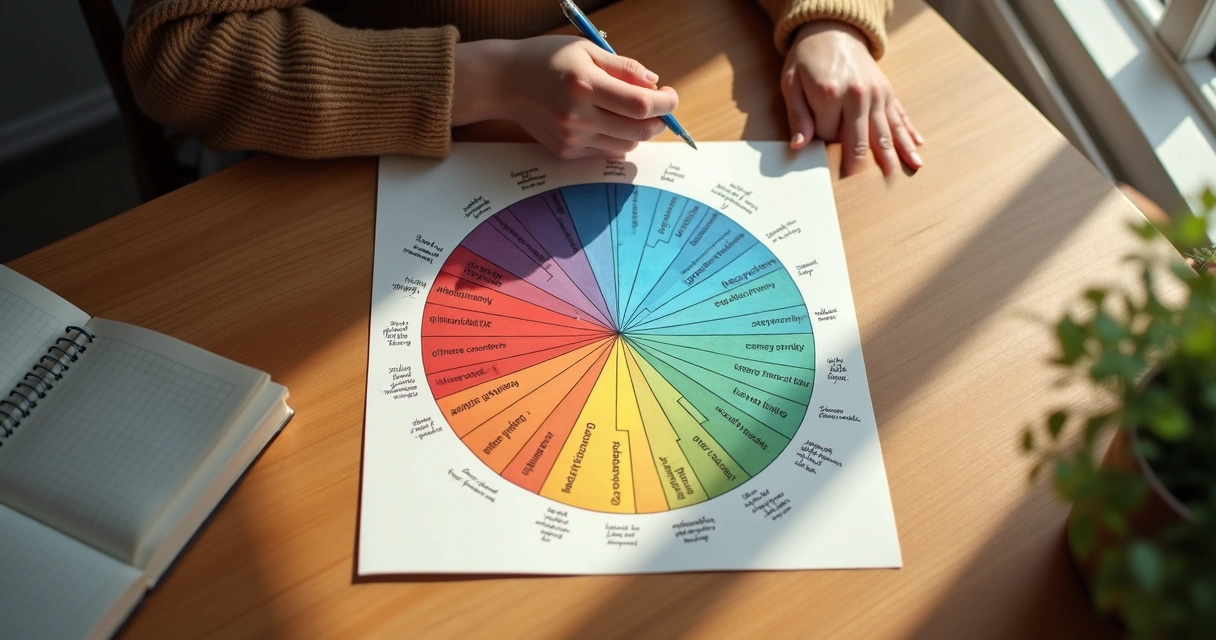
- Use emotion wheels or charts to discover new words. They expand the usual “angry,” “sad,” “happy,” and “afraid” into dozens of more detailed options.
- Talk to others. Ask how they might describe a feeling. Sometimes, we borrow helpful words from friends or family.
- Pause and ask, "What exactly do I feel right now? Is it frustration, disappointment, shame, anxiety, or relief?"
Over time, we have noticed that this process helps us react less impulsively. We are not "blanketed" by emotions, but instead see them as unique experiences, each needing different care.

The role of self-compassion in emotional granularity
Naming feelings is not the same as criticizing ourselves for having them. In our guidance, we emphasize that emotional granularity works best when paired with self-compassion. We must remind ourselves: every feeling is valid. There is no "bad" emotion—only uncomfortable ones.
The more we describe our feelings without harshness, the easier it becomes to process them and choose how to act. Self-compassion opens the door for honesty, rather than shame.
Being kind to ourselves helps us name feelings without fear.
Practical benefits in daily life
The ripple effects of emotional granularity reach far. In our work, we've seen it help couples communicate, teams avoid misunderstandings, and children bounce back from setbacks.
Describing emotions with precision improves communication, lowers conflict, and often leads to better problem resolution. For example, saying, "I feel neglected," leads to a different conversation than, "You never listen to me." Relationships of all kinds benefit.
At work or at home, people who practice emotional granularity tend to feel more in control of their choices, less tossed around by daily stress, and more able to stay balanced in conversation.
Conclusion
If we want more self-control, the first step is simple: notice and name our feelings. We become less reactive, more patient, and clearer in thought, one emotion at a time. Building emotional granularity is not just a technique but a way to honor the depth and color of our experience. We gain insight and freedom—first by naming, then by understanding, then by choosing wisely how to act.
Frequently asked questions
What is emotional granularity?
Emotional granularity is the skill of recognizing and naming emotions with detail and accuracy, instead of using broad or vague terms like "good" or "bad." It means we can tell the difference between similar emotions such as frustration, irritation, and disappointment.
How can I improve emotional granularity?
We suggest keeping a daily journal, learning new emotion words, asking ourselves what we really feel in the moment, and discussing feelings with friends or family to expand our vocabulary. The goal is to become comfortable identifying even subtle differences in how we feel.
Why does naming feelings help self-control?
Naming feelings interrupts automatic reactions and lets us choose how to respond instead of acting on impulse. When we know exactly what we feel, we are less likely to be overwhelmed or to choose actions we regret.
Is emotional granularity worth practicing daily?
Yes. Practicing emotional granularity each day strengthens our self-understanding and makes thoughtful decision-making easier. Over time, it becomes a natural part of how we deal with stress and relationships.
Can kids learn emotional granularity easily?
Children can learn emotional granularity with the right support. Activities like sharing feelings during story time, using emotion charts, and encouraging them to use new words all help kids grow more skilled at naming their emotions.