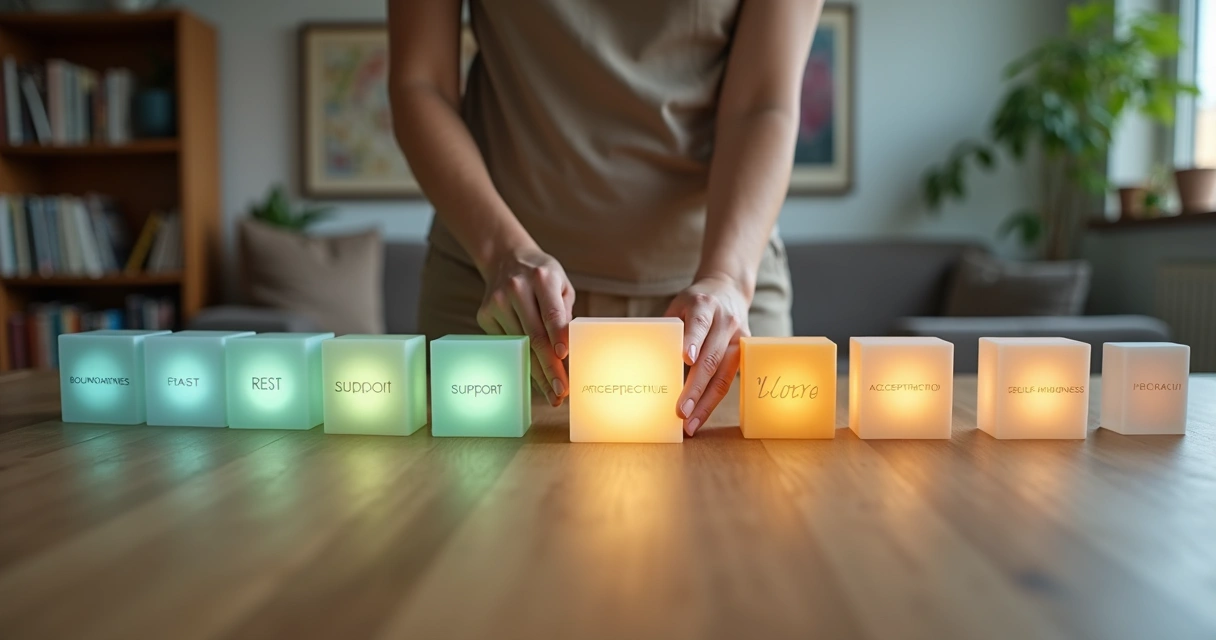


We often plan for time, money, skills, and risk. Yet many of us forget one factor that quietly shapes every long-range choice: how we expect to feel later. Emotional forecasting is the process of predicting our future emotional reactions. It influences where we live, who we commit to, what work we accept, and how much strain we think we can carry.
Long-term planning improves when we ask not only “What will happen?” but also “How will this feel over time?”
In our experience, people rarely make plans with cold logic alone. A career move may look perfect on paper, but if we imagine daily emptiness, the plan starts to weaken. A demanding degree may seem hard, but if we can picture deep meaning and pride, we become more willing to stay with it. Emotion gives weight to the future. It tells us what matters.
Still, there is a problem. We are not always good at predicting our future feelings. A recent mini-review on affective forecasting findings notes that many studies report forecasting errors, often showing that people overestimate how strong or long an emotion will last. At the same time, the picture is not simple. Some forecasts are accurate, and in some cases people underestimate their reactions. That matters for planning because a false forecast can lead us to chase the wrong future, or fear one that would actually suit us.
Why future feelings matter in planning
When we think about long-term plans, we usually focus on outcomes. We ask about salary, status, safety, location, or deadlines. But outcomes do not drive behavior by themselves. Our imagined emotional life inside those outcomes also guides us.
Think of someone choosing between two jobs. One offers higher pay. The other offers more freedom and less stress. On a spreadsheet, the first job may win. But when the person imagines waking up each morning tense and mentally absent from family life, the plan changes shape. We have seen this many times. Numbers speak. Feelings answer back.
Plans fail when inner life is ignored.
Emotional forecasting helps us test whether a goal fits our values, limits, and daily rhythm. It adds a human layer to decision-making. Without it, planning becomes flat and mechanical.
It is also useful because long-term goals usually demand sacrifice in the short term. We may accept uncertainty now because we expect later fulfillment. We may delay pleasure because we imagine future calm, pride, or relief. In that sense, forecasting emotions is part of endurance. It supports commitment.
Where emotional forecasts go wrong
If emotional forecasting is so useful, why do people still make choices they regret? Because our predictions are shaped by bias. We often focus too hard on one dramatic moment and ignore the wider flow of life around it.
For example, we may think a promotion will make us happy for years. Or we may fear that failure will crush us for a long time. In reality, most emotional states move. We adapt. New routines form. Attention shifts.
One common error is treating future emotion as fixed, when real emotional life is fluid.
We also confuse intensity with duration. We picture a strong emotional peak and assume it will continue. Yet a peak is not a whole season of life. The first week in a new city is not the same as the eighth month. The day after a breakup is not the same as a year later. Long-term planning suffers when we mistake a sharp moment for a lasting condition.
Another error comes from the present state. If we are tired, lonely, anxious, or excited right now, we often project that state forward. A person under stress may imagine any demanding goal as unbearable. A person in a burst of enthusiasm may commit too fast and overlook later fatigue.

Emotional stability and long-range choices
Long-term planning also depends on how we understand our own emotional patterns. Some people assume, “If I feel this way today, I will likely feel this way in the future.” That assumption can be misleading.
A meta-analysis on emotion dynamics and well-being found that greater emotional variability, instability, and inertia were all linked with lower well-being. This tells us something useful. Emotional life is not just about whether we feel good or bad. It is also about how much our feelings swing, how sharply they shift, and how long they linger.
When we plan for the future, we need to respect that our emotional pattern may influence how we live inside a goal. A plan that looks reasonable during a calm week may feel very different during months of instability. This does not mean we should distrust ourselves. It means we should plan with honesty.
We think this is where emotional maturity becomes practical. Instead of asking only, “What do I want?” we can ask:
How do I usually react under long periods of pressure?
Do I recover fast after setbacks, or do emotions stay with me for a long time?
Am I planning from a stable state, or from a passing mood?
These questions make planning more grounded. They bring the person back into the plan.
How to use emotional forecasting well
Good emotional forecasting does not mean trying to predict every feeling with perfect accuracy. That is not realistic. It means becoming less naive about our inner expectations.
We can do this in a few simple ways. First, we can widen the frame. Instead of imagining one future event, we imagine the routine around it. Not just the wedding day, but the marriage. Not just the job offer, but the daily work. Not just the move, but the ordinary Tuesday months later.
Second, we can compare past predictions with actual outcomes. Many of us have had moments that seemed like they would change everything, only to find that life became normal again. We have also had small choices that brought quiet, lasting peace. Our own history can teach us where our forecasts tend to bend.
Third, we can separate fear from data. A strong emotional reaction to a possible future is not always a sign of truth. Sometimes it is only a sign that the future matters to us.
The best emotional forecasts are humble, specific, and open to revision.
It also helps to write plans in layers:
State the outer goal clearly.
Name the emotions you expect before, during, and after the process.
List what could change those emotions over time.
This method gives us a more realistic picture. It turns emotion from a hidden force into a visible part of planning.

Conclusion
Emotional forecasting plays a real part in long-term planning because human beings do not live inside outcomes alone. We live inside experience. We carry moods, meaning, fatigue, hope, disappointment, and adaptation into every future we build.
When we forecast well, we do not become certain. We become wiser. We stop treating future emotion as an afterthought and begin seeing it as part of the structure of choice. That shift can protect us from plans based on fantasy, panic, or short-lived excitement.
We think the goal is not to predict every feeling correctly. The goal is to plan with enough self-knowledge that our future is not designed against our own emotional reality.
Frequently asked questions
What is emotional forecasting in planning?
Emotional forecasting in planning is the act of predicting how we may feel about a future event, decision, or life path. In planning, it helps us judge whether a goal will likely bring stress, relief, meaning, regret, or satisfaction over time.
How does emotional forecasting help decisions?
It helps decisions by adding the human side of the future to facts and strategy. When we estimate our likely emotional response, we can compare options more honestly and avoid choices that look good on paper but feel wrong in daily life.
Is emotional forecasting worth learning?
Yes. It is worth learning because many long-term choices depend on our ability to picture not only outcomes, but lived experience. Better forecasting can reduce avoidable regret and support plans that match our values and emotional limits.
What are the benefits of emotional forecasting?
The benefits include clearer self-understanding, better long-range choices, stronger commitment to meaningful goals, and less confusion between short-term emotion and long-term fit. It also helps us notice when we are overestimating fear or idealizing reward.
How can I improve my emotional forecasting?
We can improve it by reviewing past predictions, imagining ordinary daily life instead of dramatic peak moments, writing down expected emotions at each stage of a plan, and waiting to make major choices when our present mood is more stable. This builds a more realistic view of the future.